Mobile BESS Trailer Romania
Entry-ticket equipment-leasing position. €80K co-invest floor.
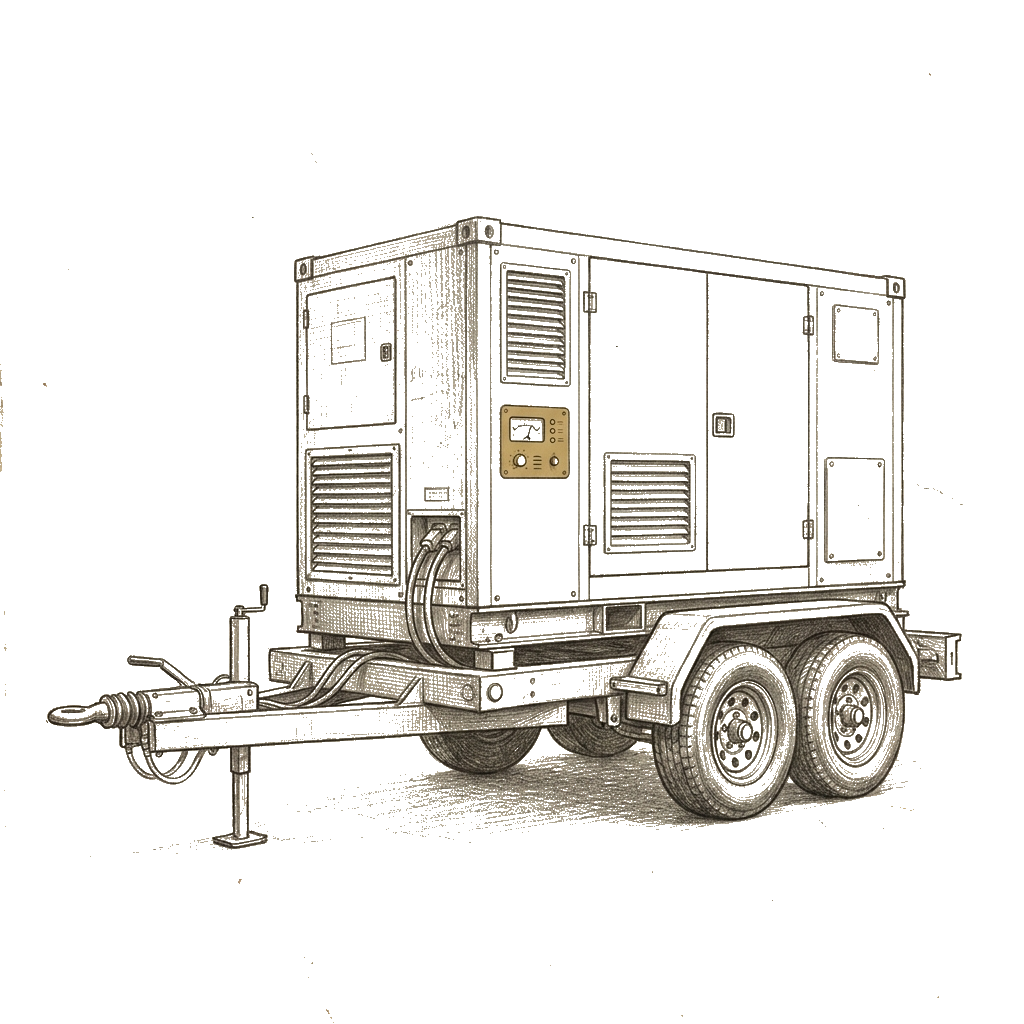
A trailer-mounted lithium-ion battery container, manufactured in Brașov by a Romanian battery manufacturer, leased to a licensed Romanian grid operator on a ten-year fixed-rent contract. The investor owns the unit through their EU-domiciled company. Rent is paid quarterly at a target gross yield of approximately 15% per year. The asset stays on the investor's balance sheet for the term, with full-replacement Tier-1 insurance and a 10 to 15-year manufacturer warranty on the cells. The trailer comes off the same manufacturing line as the two stationary 250 kW units already operating in Brașov, where a site visit can be arranged.
Asset
| Type | Trailer-mounted Li-ion battery container |
| Manufacturer | Romanian battery manufacturer, Brașov |
| Operator | Licensed Romanian grid operator |
| Location | Romania (mobile asset, deployable) |
| Vehicle | Investor's EU-domiciled company |
| VAT treatment | Reverse charge, intra-EU acquisition |
| Insurance | Tier-1 EU carriers, lease-duration cover |
| Manufacturer warranty | 10 to 15 years on cells |
Commercial terms
| Co-invest floor | €80,000 (mobile-BESS pool) |
| Scalable to | €5M+ via additional trailers |
| Target gross yield | ~15% p.a., EUR-denominated |
| Income frequency | Quarterly |
| Term | 10 years |
| Downside path | Relocate trailer, re-lease or resell |
| Romania day-night spread | 15 to 25%, the widest in the EU |
| Government support | EUR 300M scheme for standalone BESS |
| Pipeline (announced) | 2 GW+ from listed utilities |
Romanian power swings 15 to 25% between day and night. The operator captures that spread; the investor collects fixed rent on the box that does the capturing. Listed utilities have 2 GW+ of pipeline announced, the state has €300M earmarked for standalone BESS, and demand for new units is set for several years.
Operator counterparty over a ten-year horizon. Rent is contracted, but only as good as the counterparty paying it. Mitigant: the trailer is mobile, so re-lease optionality is real if the original operator falls away. Physical asset retention provides a re-lease floor.
Spread compression. Romania's 15 to 25% day-night spread is the economic basis for the operator's lease payments. As more storage gets built, the spread can compress. The fixed-rent structure insulates the investor's quarterly income from this in the short term and affects renewal terms beyond year ten.
Residual value at year ten. Cell capacity at end of warranty is typically 70 to 80% of original. Re-lease or resale at year ten is at a lower price point than year one.
The investor's EU company is the buyer of record. The trailer is acquired under intra-EU reverse charge (zero VAT cash impact). Lease and insurance documentation are standard. Position scales by acquiring additional units.
Next step: 30-minute introduction call to walk through the structure and the Romanian grid context. Book the call →